

5 Free Tools to Make Your Code Agent More Reliable

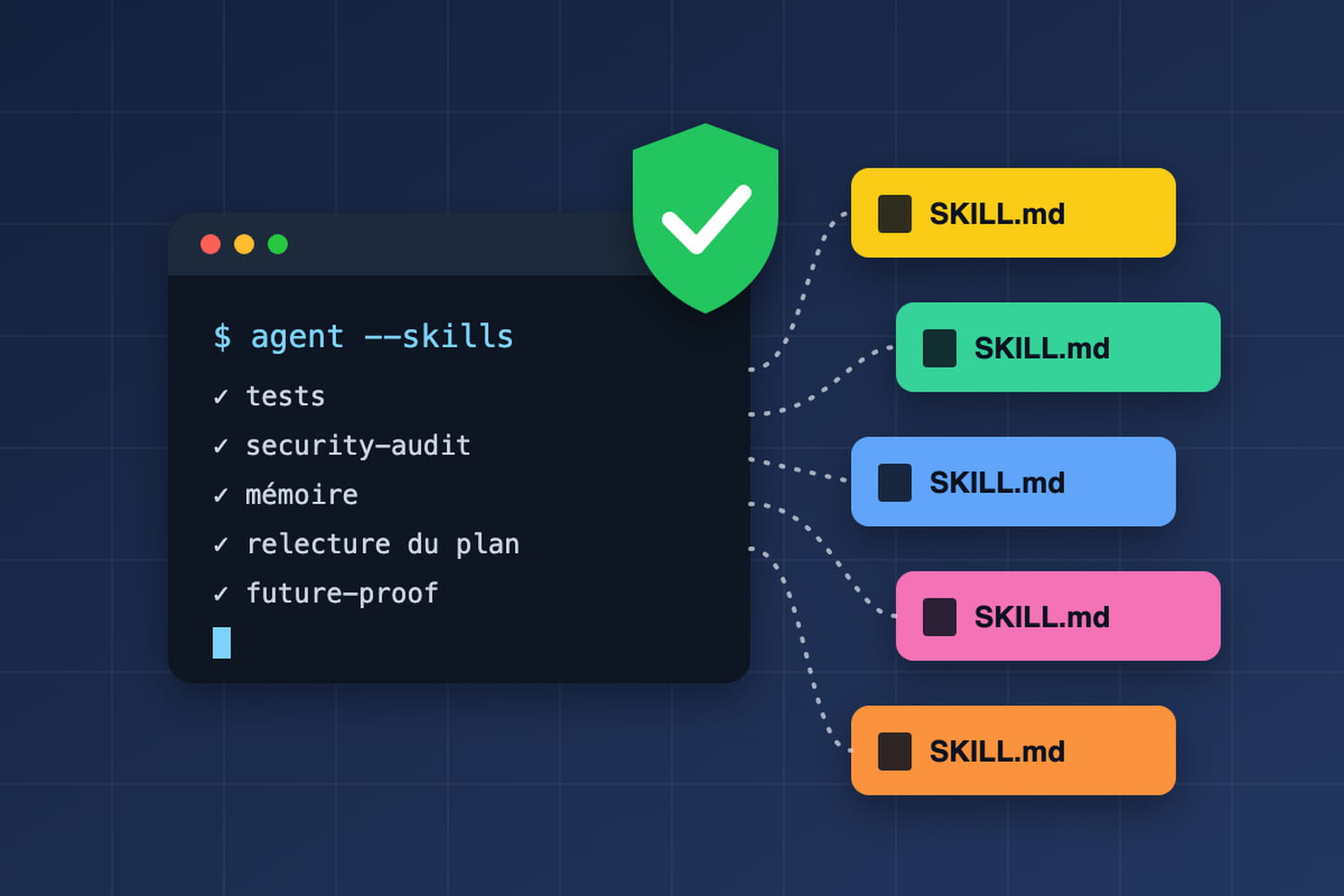
Without clear instructions, a code agent improvises. To avoid having to repeat the same architecture guidelines, conventions, methods, or procedures over and over, Anthropic launched skills a year ago. These are small markdown files that teach your code agents—whether Claude Code or Codex—how to act in a given situation. Since then, engineers and companies worldwide have developed open source skills to produce higher-quality, more sustainable code. JDN has selected four of these for you, plus a fifth bonus skill we created ourselves.
Skills For Real Engineers: clean coding
This is one of the most frequently cited libraries when it comes to skills tailored to the software development lifecycle. Matt Pocock is a British developer and trainer, originally known worldwide for his expertise in TypeScript (Microsoft's programming language). He has since become a leading authority on code agents. Since February 2026, he has made his own code skills available on his GitHub—skills he uses daily, designed based on the shortcomings he observed in Claude Code and Codex in recent months. Updated almost every week, the 27 skills help you guide your agent more precisely before tackling complex development, avoid verbose outputs, test new code regularly and systematically, and even suggest code improvements on its own. In short, it's the perfect toolkit for everyday developers.
To install with Claude Code:
claude plugin install mattpocock-skills@claude-plugins-official
To install with Codex:
codex plugin marketplace add mattpocock/skills
codex plugin add mattpocock-skills@mattpocock
security-audit: hunt down code vulnerabilities
This is the skill that's been most in demand among SaaS application developers in recent months: security-audit. Released by Cloudflare last June (and updated several times since), it scans your code for vulnerabilities. It reviews your project's architecture, searches for flaws by category, checks whether each one is actually exploitable, and produces a final report with recommendations. Each result is labeled "confirmed", "to be validated", or "rejected". By default, the skill uses sub-agents to dig deep into your code. At a time when cybercriminals are using AI on a massive scale to hunt for the smallest flaw, this is an excellent way to avoid deploying vulnerable code to production.
To install:
npx skills add https://github.com/cloudflare/security-audit-skill --skill security-audit
Obsidian Skills: manage Obsidian memory
Obsidian (a markdown note-taking app) is already widely used by developers to give Claude Code or Codex a second brain, by storing (partially or fully) the agent's memory in a usable format. Developed by Steph Ango, Obsidian's CEO himself, the plugin contains six skills that let you natively write markdown in Obsidian format, create databases with views, filters, and formulas, design visual tables, manage your vault (Obsidian's storage) via the command line (it explains each command to the model), and even fetch web pages and convert them into clean markdown without extra characters. Most importantly, the plugin reminds the agent of the correct Obsidian format for each file it creates, taking into account the latest format updates. This keeps the agent's memory cleaner and more reliable over time.
To install:
npx skills add https://github.com/kepano/obsidian-skills
Elephant-Goldfish Model: cold review
Published last October by a team of Google engineers, the Elephant-Goldfish Model puts into practice a method devised by Dave Rensin, a distinguished engineer at Google (one of the company's highest technical ranks). The method assigns the code project plan to a single agent who keeps all the context—the "elephant". Several memoryless agents, the "goldfish", then review it cold, without having seen the conversation. Their job is to spot implicit assumptions, vague requirements, and implementation risks. In the end, the developer makes the final call, validates, and only then does the agent move on to coding. The goal? Catch design errors in the plan before they show up in the code.
To install with Claude Code:
claude plugin marketplace add google/elephant-goldfish-model
claude plugin install egm@egm
To install with Codex:
codex plugin marketplace add google/elephant-goldfish-model
codex plugin add egm@egm
Future-proof: assess a project for the long term
Developed by yours truly, the future-proof skill is based on advice from Tibo Sottiaux at OpenAI: build your projects assuming AI models will be about ten times better in a year. The idea is to avoid launching a product or feature that will be obsolete in twelve months because it was designed for today's models. Before starting a new project or feature, the skill has a separate reviewer agent evaluate it using seven criteria, including: does the project benefit from AI progress, can other agents use it, does it depend on current pricing, and what will remain truly defensible (data, distribution, trust)? It gives a score out of 10 at three, six, and twelve months, and if the one-year score is too low, it suggests a revised plan. The goal is to avoid wasting weeks coding something that won't be useful a year from now.
To install, give this prompt to your Claude Code or Codex agent:
Install the skill from https://github.com/BenjaminPolge/future-proof. Clone it, read install.sh before running it, then run it with --hook if I use Claude Code. Verify that the skill, the reviewer agent and (for Codex) the AGENTS.md section are in place. Do not modify my other configuration.
This article was automatically translated from French. Read the original version: https://www.journaldunet.com/intelligence-artificielle/1557781-5-skills-gratuites-pour-rendre-votre-agent-de-code-plus-fiable/