

US Fed Faces Pressure from Inflation and Trump Over Rate Decision

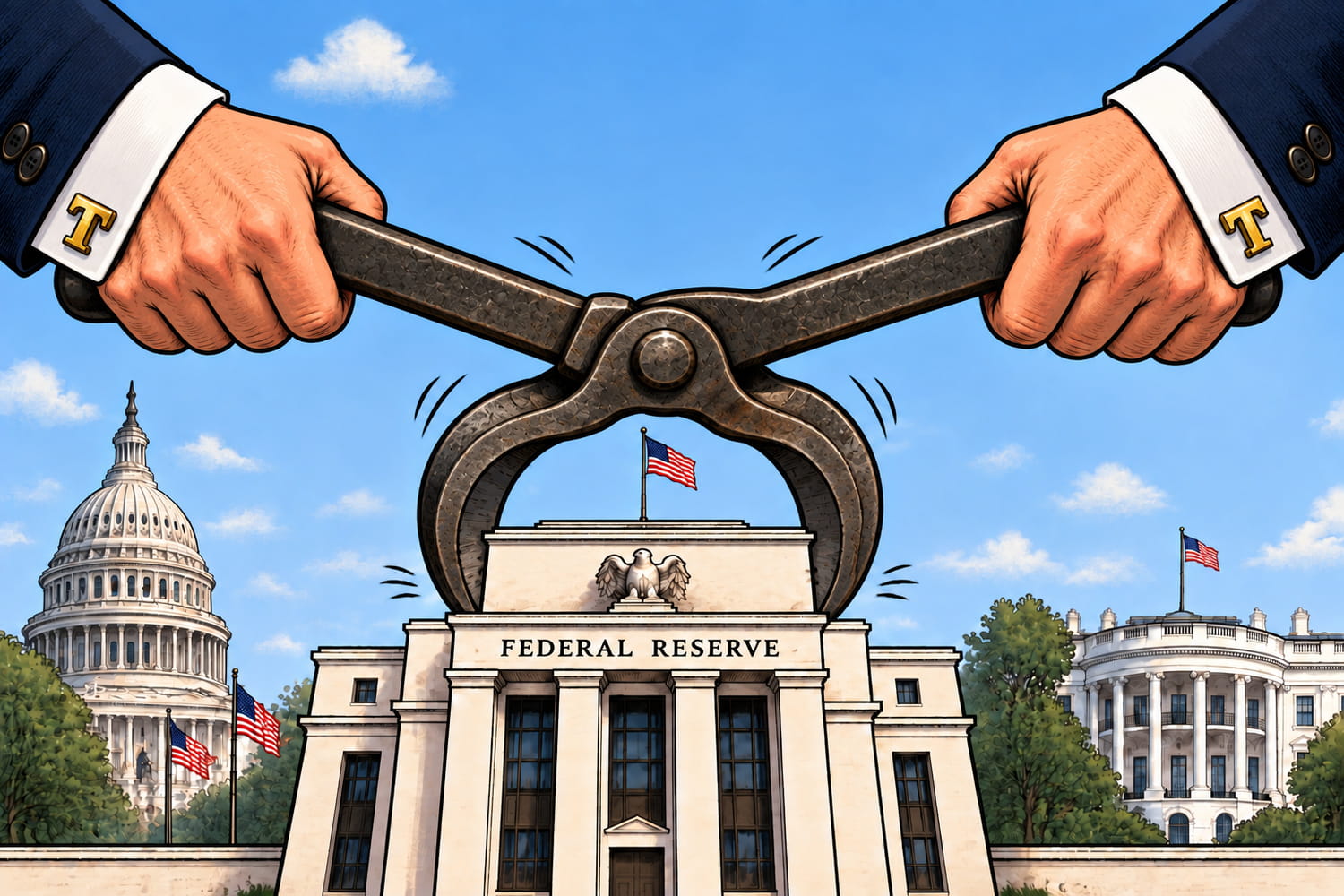
Donald Trump does not always shine for his consistency, but if there is one issue on which he has stuck to the same line since his return to power, it is the Fed's key interest rate, which the president considers too high and wants to see lowered to speed up the economic recovery.
But as the US central bank prepares to announce its decision on interest rates, it is highly likely that the US president will be disappointed, with many factors arguing in favour of a rise, and most experts considering waiting to be unwise, while a cut is not even on the table. This scenario could well sow discord between the US president and Kevin Warsh, whom he recently chose to head the Fed after Jerome Powell's term expired.
Kevin Warsh, Trump's pick
Powell, also appointed by Trump during his first term, initially had good relations with the president, until Trump began to consider him too cautious in his efforts to curb inflation, dubbing him "Jerome Too Late Powell" (for being too slow to cut rates) and sometimes using less flattering terms. The US president also repeatedly threatened to fire Jerome Powell before the end of his term, something he does not actually have the power to do.
Powell ultimately completed his term, and Donald Trump appointed Kevin Warsh in his place, who has a rather "dovish" profile—meaning he is likely to prioritise growth, and therefore lower rates, over fighting inflation, but is more cautious and consensual on the matter than other candidates considered by Trump whose names had leaked to the press. Warsh also took care to soften his rhetoric and demonstrate that he could show independence and pragmatism during his Senate hearing prior to his appointment (while the Fed chair is chosen by the president, a Senate vote is required to confirm the appointment).
Iran and AI fuel inflation
At the start of the year, the elements seemed to be aligning for the scenario Donald Trump wanted. Inflation was easing, the labour market, though still dynamic across the Atlantic, was showing signs of weakness, and the private equity crisis seemed to justify a rate cut that could revive the IPO market.
But two factors disrupted this. The first is entirely down to Donald Trump himself, namely the war he launched against Iran, which further disrupted global energy flows already strained by the war in Ukraine and pushed inflation up again, reaching its highest level in three years in the US last May. The second factor lies in the massive spending by tech giants on data centres, borrowing to do so at unprecedented levels, which has both pushed up rates and accelerated inflation. By May, when Kevin Warsh was appointed, a rate cut was no longer on the agenda, with concern over rising inflation replacing fears of an economic slowdown.
The Fed's credibility at stake
The new Fed chair delayed as much as possible, keeping rates steady once in mid-June, when many expected a rise, and again at the end of July. Delaying again would be difficult and could undermine confidence in the Fed's independence, suggesting its chair is more concerned with pleasing Donald Trump than safeguarding the health of the US economy. Investment bank Pictet noted in a recent report that "not raising rates on Wednesday would pose a risk to the institutional credibility of the Federal Reserve and could lead to a further rise in long-term yields. We therefore expect a resolutely hawkish tone at Jerome Warsh's press conference."
All the more so as recent events further support a rate hike. Attacks by Houthi rebels on Saudi infrastructure have heightened supply fears, pushing Brent crude above 100 dollars a barrel, its highest level since May. Warsh himself told economists and central bankers at a conference last month that rising prices had become "worrying" and that monetary policymakers would have "work to do" if inflation did not calm down quickly.
Added to this is a healthy US labour market: the latest figures from the Bureau of Labor Statistics, published on 4 September, show that the US economy created 162,000 jobs in August. This figure is much higher than expected and brought the unemployment rate down to 4.1%. This historically low level puts the US in a situation of full employment. In this context, it is hard not to justify a rate hike to curb inflation.
"After a stronger-than-expected rise in inflation, continued increases in energy prices and higher long-term bond yields, we now expect the FOMC to raise its key rates by 25 basis points, to 3.75-4%, whereas we previously expected no change," says Pictet.
"The August consumer price index report was slightly higher than expected and makes a Fed rate hike on Wednesday almost certain," says Felix-Antoine Vezina-Poirier of investment research firm BCA Research.
Towards a Warsh vs Trump clash?
Still, a rate hike would be likely to displease Donald Trump, who recently reiterated that the US should "pay the lowest interest rates in the world", all the more so as the midterm elections are approaching, which Donald Trump would prefer to face with a buoyant economy. Kevin Hassett, Trump's chief economic adviser and himself once considered for the post now held by Kevin Warsh, recently used a strange argument in a Fox News interview, claiming that a rate hike now would amount to the Fed intervening in the elections: "I would be cautious about a rate hike... I think if you want an independent Fed, then one of the things it must do is not interfere in the elections," he said.
The US president also recently stated that Trump said if Warsh "wants to do the right thing" regarding interest rates, he could be thwarted by a "political" and "hostile" Federal Open Market Committee (FOMC), the body of the US Federal Reserve responsible for deciding monetary policy. A way of suggesting that he might not hold the Fed chair directly responsible for any rate hike? Such a move must in fact be approved by a majority of the twelve FOMC members, who vote at each meeting, and the chair's vote counts as only one.
Ironically, a rate hike could help contain longer-term interest rates by strengthening the Fed's credibility. Part of the recent surge in mortgage rates actually reflects investor concerns about the Fed's lack of commitment to fighting inflation.
This article was automatically translated from French. Read the original version: https://www.journaldunet.com/business/action-publique/1554887-etats-unis-la-fed-pris-en-tenaille-entre-l-inflation-et-trump/